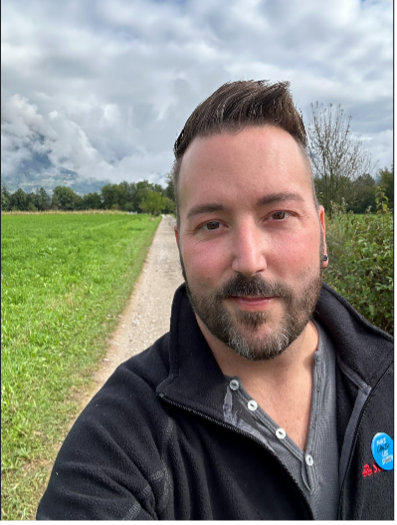

Wyatt Davila
I was diagnosed with Stage 4 non-small cell lung cancer in 2021, at the age of 33. Like many people my age, lung cancer was never something I imagined could happen to me. I didn’t have any of the symptoms commonly associated with it. For years, I had been dealing with migraines but I was born with a condition called hydrocephalus, where fluid builds up within the brain. I have a shunt to drain the fluid, so most of my medical attention was focused on managing that condition.
My diagnosis happened almost by accident. I went into what was supposed to be a routine surgery to replace my shunt when doctors noticed nodules on my lungs during imaging. At first, they believed it was likely to be an infection, so they treated me with an infusion of antibiotics for 2 weeks before doing a biopsy to take a small sample for testing and sending me home. A few weeks later, I visited my primary care doctor expecting to review the biopsy results, only to find out they had never been sent over from the hospital. We spent hours tracking them down. When my doctor finally came back into the room, he told me the news that completely changed my life: I had Stage 4 lung cancer.
At first, doctors thought the cancer started in my digestive system because of a biomarker found during testing, so I was initially referred to a gastrointestinal oncologist. After extensive testing, they determined that the cancer was only present in my lungs, so I was transferred to a thoracic oncologist. I began treatment in February 2021, and since then my journey has included eight different systemic treatments, participation in two clinical trials, and most recently radiation therapy. Along the way, treatment has not always been straightforward. During one of the clinical trials, I experienced a heart attack, and living with HIV has also added complexity to my treatment decisions and care.
Despite everything, I have found an incredible sense of connection through the adolescent and young adult (AYA) cancer community. Through AYA adventure camps, I’ve had the opportunity to take part in experiences I never imagined: surfing, snowboarding, hiking the Dolomites, paddleboarding, climbing sand dunes, and even staying in a medieval castle in Italy. I’ve now attended six of these trips, but what has meant the most is the people I’ve met along the way. Being surrounded by others who truly understand what it’s like to live with cancer at a young age has been life-changing, and many of those connections have become lifelong friendships.
At the same time, being part of the cancer community also means experiencing loss. Over the years I have lost friends, people who shared these experiences and understood this journey in a way few others can. Those losses are deeply felt and serve as a reminder of why advocacy and awareness are so important.
Today, I use my voice through advocacy to share my story, build connections, and help make information more accessible for people affected by lung cancer. Living with cancer has changed the course of my life in many ways, but it has also shown me the power of community and the importance of ensuring that patients feel seen, heard, and supported.